Showing posts with label Adam Mulcahy. Show all posts
Showing posts with label Adam Mulcahy. Show all posts
Wednesday, 15 December 2010
Our Final Children's Film
This is our final film. Overall we are really pleased with our final product, as it went really well. Many people who have seen it were astounded by the unique animation style that we used. However at first our music wasn't perfectly suited for the scene towards the end of the clip. We then changed this so that the music worked better for the narrative, and to show that that the film was to continue. We did this also to make our product look more like an opening, rather then it looking like a trailer.

Monday, 13 December 2010
Final production analysis
Final Production Analysis
We feel our final production was a success because after animating successfully over a period of 2 and a half lessons, we were able to quickly edit what we had filmed and add sound to our opening.
To improve we could:
We feel our final production was a success because after animating successfully over a period of 2 and a half lessons, we were able to quickly edit what we had filmed and add sound to our opening.
To improve we could:
Wednesday, 8 December 2010
Second Day of Filming
Second Day of Filming
We started off the second day by filming the male bird bouncing on the fly, this is a long shot as it shows the scale and obscurity of how far up the bird jumps. The pace of editing is fast as the anger of the male bird is shown in an outburst as he is bouncing on the fly. It is an innocent bit of violence suitable for the target audience as it is seen as humorous rather than violent or aggressive. This shows to children that men try to assert power over the other characters as the male bird so far has proven he is brave. All of the other birds then come in amazement to see the male bird bouncing on the naughty fly. The other birds facial expressions show that they are simple because they follow the male bird with their eyes in awe. There is a tracking shot, following the bouncing bird, to show that the other birds eyes are watching him, the pace of editing is still reasonably fast.

The camera then goes to the moose looking blankly, this is a close up on his face which shows there is nothing happening to the moose. Then there is a zoom in on an extreme close up on his eyes which now resemble eggs. The pace of editing is always slow around the moose to emphasize their characteristics of being dull. The moose are a dull brown colour but when the eggs appear in the moose eyes, then there is a hint of difference and the characteristics of the moose change to something more sinister. The camera goes back to the birds where they are looking at the crater where the fly has been crushed. This is a long shot as it shows the next behind them which is empty. This is an over the shoulder shot which emphasizes the empty nest. The pace of editing is slow until they turn around as they are quite peaceful but the scene changes when the birds turn around and see the empty nest and the camera shows their reaction. There is then a zoom in on the nest with the reaction of the birds staying the same, showing their shock and dismay at the sight.

There is then another over the shoulder shot of the birds looking on to the next hill at the moose cuddling up to the eggs. The camera then pans to show more of the moose to show that the birds have lost to the moose. The pace of editing is slow is it is a sudden realisation of the loss of eggs. The camera zooms in to strengthen this and humours the audience as the moose looks very smug. The moose then does his trademark tongue licking as he licks the eggs to basically give two fingers up at the birds but does it in an innocent manner for the target audience to appreciate. There is an extreme close up on the birds eyes to show the ever growing anger towards the moose. The reaction shot shows that the birds feel ashamed to be outsmarted by the moose and this is shown by a slow pace of editing as normally slow editing is used for the moose. The birds eyes darken to suggest he has a plan.
The second day of filming was successful as we almost finished all the filming and we have a good plan on what we have to complete.
We started off the second day by filming the male bird bouncing on the fly, this is a long shot as it shows the scale and obscurity of how far up the bird jumps. The pace of editing is fast as the anger of the male bird is shown in an outburst as he is bouncing on the fly. It is an innocent bit of violence suitable for the target audience as it is seen as humorous rather than violent or aggressive. This shows to children that men try to assert power over the other characters as the male bird so far has proven he is brave. All of the other birds then come in amazement to see the male bird bouncing on the naughty fly. The other birds facial expressions show that they are simple because they follow the male bird with their eyes in awe. There is a tracking shot, following the bouncing bird, to show that the other birds eyes are watching him, the pace of editing is still reasonably fast.

The camera then goes to the moose looking blankly, this is a close up on his face which shows there is nothing happening to the moose. Then there is a zoom in on an extreme close up on his eyes which now resemble eggs. The pace of editing is always slow around the moose to emphasize their characteristics of being dull. The moose are a dull brown colour but when the eggs appear in the moose eyes, then there is a hint of difference and the characteristics of the moose change to something more sinister. The camera goes back to the birds where they are looking at the crater where the fly has been crushed. This is a long shot as it shows the next behind them which is empty. This is an over the shoulder shot which emphasizes the empty nest. The pace of editing is slow until they turn around as they are quite peaceful but the scene changes when the birds turn around and see the empty nest and the camera shows their reaction. There is then a zoom in on the nest with the reaction of the birds staying the same, showing their shock and dismay at the sight.

There is then another over the shoulder shot of the birds looking on to the next hill at the moose cuddling up to the eggs. The camera then pans to show more of the moose to show that the birds have lost to the moose. The pace of editing is slow is it is a sudden realisation of the loss of eggs. The camera zooms in to strengthen this and humours the audience as the moose looks very smug. The moose then does his trademark tongue licking as he licks the eggs to basically give two fingers up at the birds but does it in an innocent manner for the target audience to appreciate. There is an extreme close up on the birds eyes to show the ever growing anger towards the moose. The reaction shot shows that the birds feel ashamed to be outsmarted by the moose and this is shown by a slow pace of editing as normally slow editing is used for the moose. The birds eyes darken to suggest he has a plan.
The second day of filming was successful as we almost finished all the filming and we have a good plan on what we have to complete.
Monday, 6 December 2010
First Day of Filming
Filming Day 1
On the first day of filming, we started to use the program iStopMotion to capture images for our animation which were captured by a camera connected to the computers. We started off animating the opening titles by capturing clouds moving across the sky with the production information and having a bird fly past to set the genre of an animated adventure. We were all delegated jobs and with in half an hour we had accomplished a quarter of our filming.
We then went on to the first scene of the opening, in which two birds, Phil and Honey, are staring over their eggs in a happy manner. This was an establishing shot as it showed the whole set and the sun in the sky. A high angle is used to show that the birds are not as strong as other characters such as the moose. There was then a close up of the two birds, showing their characteristics at being happy because of their eggs, thus giving off an image of a good family which the target audience, children, can relate to. The colours of the set are bright so that children do not get bored and the birds are abstract colours so that children can find this amusing. The pace of editing was slow because it shows a natural style and gives the audience a false sense of hope for what is yet to come.

The next shot we did was of the Moose, in a darker setting to show they are the 'bad guys' and that the target audience should see these characters as trouble. There is a mid shot instead of a high angle to shot that the moose are stronger than the birds, emphasising that they are stronger. Their body language is dull to show that they are lazy characters and they are eating the grass on the hill to show they are simple characters. Then there is an extreme close up on the eggs to show that they are an important part of the storyline. Children can associate with eggs as they have many encounters with eggs such as Easter. The camera then goes back to the moose who look over there shoulders and see the eggs. This is a close up on the main moose as his eyes change which is a shock for the audience as the moose have shown no emotion so far. This is a hint to the audience that something is about to happen. This is a good use of shot reverse shot between the eggs and the moose which shows a naturalistic style of editing.
After the shot reverse shot, the camera goes to the happy birds again, who are still in control of the eggs, this prop proving to be a key factor in the sequence. In the shot with the birds there is a low angle of a fly, flying down towards the eggs. There is a reaction shot of the birds, the female bird crying, showing that she is a protective mother and the male bird is angry, showing that he wants to prove he is a proper man. The pace of editing speeds up as the scene is becoming more intense and character development is apparent. There is then another close up of the eggs, with the fly reaching them, showing their vulnerability in the scene, compared to the other characters. As the fly is sitting on the eggs, there is a zoom out into a mid shot, showing a reaction shot of the birds. The pace of editing slows down to show that something is about to happen.

The first day was very successful as we managed to do half of all the filming and become more used to the technology and techniques which will be useful for later projects.
On the first day of filming, we started to use the program iStopMotion to capture images for our animation which were captured by a camera connected to the computers. We started off animating the opening titles by capturing clouds moving across the sky with the production information and having a bird fly past to set the genre of an animated adventure. We were all delegated jobs and with in half an hour we had accomplished a quarter of our filming.
We then went on to the first scene of the opening, in which two birds, Phil and Honey, are staring over their eggs in a happy manner. This was an establishing shot as it showed the whole set and the sun in the sky. A high angle is used to show that the birds are not as strong as other characters such as the moose. There was then a close up of the two birds, showing their characteristics at being happy because of their eggs, thus giving off an image of a good family which the target audience, children, can relate to. The colours of the set are bright so that children do not get bored and the birds are abstract colours so that children can find this amusing. The pace of editing was slow because it shows a natural style and gives the audience a false sense of hope for what is yet to come.

The next shot we did was of the Moose, in a darker setting to show they are the 'bad guys' and that the target audience should see these characters as trouble. There is a mid shot instead of a high angle to shot that the moose are stronger than the birds, emphasising that they are stronger. Their body language is dull to show that they are lazy characters and they are eating the grass on the hill to show they are simple characters. Then there is an extreme close up on the eggs to show that they are an important part of the storyline. Children can associate with eggs as they have many encounters with eggs such as Easter. The camera then goes back to the moose who look over there shoulders and see the eggs. This is a close up on the main moose as his eyes change which is a shock for the audience as the moose have shown no emotion so far. This is a hint to the audience that something is about to happen. This is a good use of shot reverse shot between the eggs and the moose which shows a naturalistic style of editing.
After the shot reverse shot, the camera goes to the happy birds again, who are still in control of the eggs, this prop proving to be a key factor in the sequence. In the shot with the birds there is a low angle of a fly, flying down towards the eggs. There is a reaction shot of the birds, the female bird crying, showing that she is a protective mother and the male bird is angry, showing that he wants to prove he is a proper man. The pace of editing speeds up as the scene is becoming more intense and character development is apparent. There is then another close up of the eggs, with the fly reaching them, showing their vulnerability in the scene, compared to the other characters. As the fly is sitting on the eggs, there is a zoom out into a mid shot, showing a reaction shot of the birds. The pace of editing slows down to show that something is about to happen.

The first day was very successful as we managed to do half of all the filming and become more used to the technology and techniques which will be useful for later projects.
Thursday, 2 December 2010

Wednesday, 1 December 2010
Plan for filming
Filming Plan
As our group thinks we will be doing animation for our children's film opening, no one will be acting in the scene but we will all be doing voice overs for the characters. We also think that the voices we do will be in the form of noises instead of speaking to make it more funny for the audience as children are more likely to connect with humour, rather than long winded conversation. We got the idea of doing this from the successful film Wall-E as there is barely any speech in the whole film.

As our group thinks we will be doing animation for our children's film opening, no one will be acting in the scene but we will all be doing voice overs for the characters. We also think that the voices we do will be in the form of noises instead of speaking to make it more funny for the audience as children are more likely to connect with humour, rather than long winded conversation. We got the idea of doing this from the successful film Wall-E as there is barely any speech in the whole film.

A screen shot from the film Wall-E.
Also because we are thinking of doing animation, we will not need any costume but the props we are using are the models and scenery in which we will be using to animate from. Connor Banks will be taking care of the props and scene as he drew them. The place in which we would be filming would be near a computer as we would be using iStop Motion software to capture our animation. We would need permission from the media studies teachers as the technology is expensive.
Monday, 29 November 2010
Additional research for Children's film - DreamWorks Animation SKG, inc.
DreamWorks Animation SKG, inc.
For our groups Children's film project, we want to go down the route of animation but we were not quite sure which style of animation to do. So we decided to each do research about a particular type of animation, mine being that of which is done by the company DreamWorks Animation SKG, inc. (DWA), their most successful animations being The Shrek series, The Madagascar series and Kung fu Panda. They specialise in CGI films which may be difficult for work in a classroom as the technology they use is worth millions.

DWA specialise in U films and PG films but mainly U films because they make films brightly coloured and want to appeal to the a big film target audience, children. They are a good company to study therefore, as what they do year in year out is what my group aim to attempt but on a smaller scale. The classifications are important for DWA as they do not want to ruin their image as a family brand.


Photos from several successful productions from DreamWorks Animation SKG, inc.
Happy Chapman - Garfield
Background information on the film:
Garfield the movie, which came out in 2004, and it was directed by Peter Hewitt, produced by John Davis, John Kilkenny, Michele Imperato, Brian Manis and Neil Machlis. The film was made in America and was released on June 11th 2004 and made just under 200 million dollars. Although the film made a lot of money, it was received badly and has been given many bad awards such as the rotten tomato award. The film stars Bill Murray, Breckin Meyer, Mac Davis, Anne Murray, Jennifer Love Hewitt and Stephen Tobolowsky who plays the intriguing character of Happy Chapman.

Happy Chapman's personality in the film is mainly represented through the use of mise-en-scene. The characters body langauge, shows his personality as being rather humerous for the audience ecspecialy the children who watch it. However he also has a sinister side as his face always has sarcastic overtone, this can scare children but it adds to the humour as he can change personality rapid. The use of the micro features in the film are used to show Happy Chapman's lust for success and general insanity through the use of close ups on his face to show how Happy identifies situations.

The character himself has a moral behind him as he doen't like the other charcaters in the film as none of them please him and he also thinks they are below him because he is reasonably wealthy yet he still wants more. The use of body language is used to show Happy Chapman's personality, as rather blunt but funny for children to watch. The film also indicate the importance of family and friendship, as Happy Chapman is a lonely, sour character.

Happy Chapman also appears as funnier for young children with the way he dresses and acts. The film uses lots of colours in the form of Garfield as he is a bright orange cat contrasting with the rest of the cast to show he is different and the CGI makes the film appeal to younger veiwers and made it look more realistic.
The film is certificate U as I think it contains no sexual references, no swearing and violence is shown as the only outcome in some cases, none of which is shown. I would agree with this certificate as the language in the film is suitable for the target audience.
The film is certificate U as I think it contains no sexual references, no swearing and violence is shown as the only outcome in some cases, none of which is shown. I would agree with this certificate as the language in the film is suitable for the target audience.
Back To The Future Story Board
Storyboard
The task we had to do was to watch a clip from Back to the future and analyse its story storyboard factors such as mise-en-scene, framing, shot types and information such as sound. We were told to do a storyboard as it was practice for the final children's film task so that we knew how to organise our thoughts on the paper. Once we had made notes we put them into the form of a storyboard, drawing the shot types and mise-en-scene, while writing underneath the sound and framing.
Connor looked at the mise-en-scene in which he noticed that the main props were household items such as clocks, a toaster, dog food and a television. The clothing was 1980's in fitting with the time period, and the setting was an old mans house which was full of junk, showing the modern life of the time of trying to find new ideas since the boom of television.
Adam Mulcahy looked at sound and diegetic sound throughout the first sequence of the scene where the house hold items such as the clocks were ticking, differed in pace to create suspense and confusion. This portrayed the confusion of the old mans character and when the young boy comes and finds that the man is not there, it adds to the mystery of this obscene character.
The main shot types which Mel looked at was a pan of a mid angle close up of the house hold items showing that on their own they created a simple scene but the pan then shows that the sheer amount of them compacted into the house just shows the complexity of the characters and the objects in the house. When the guitar goes off at the end of the scene, there is a fast tracking shot of the boy as he flies backwards from the blast of the amplifier.

Our storyboard of the film Back to the Future, which includes sound, framing, shot types and mise-en-scene.
The task we had to do was to watch a clip from Back to the future and analyse its story storyboard factors such as mise-en-scene, framing, shot types and information such as sound. We were told to do a storyboard as it was practice for the final children's film task so that we knew how to organise our thoughts on the paper. Once we had made notes we put them into the form of a storyboard, drawing the shot types and mise-en-scene, while writing underneath the sound and framing.
Connor looked at the mise-en-scene in which he noticed that the main props were household items such as clocks, a toaster, dog food and a television. The clothing was 1980's in fitting with the time period, and the setting was an old mans house which was full of junk, showing the modern life of the time of trying to find new ideas since the boom of television.
Adam Mulcahy looked at sound and diegetic sound throughout the first sequence of the scene where the house hold items such as the clocks were ticking, differed in pace to create suspense and confusion. This portrayed the confusion of the old mans character and when the young boy comes and finds that the man is not there, it adds to the mystery of this obscene character.
The main shot types which Mel looked at was a pan of a mid angle close up of the house hold items showing that on their own they created a simple scene but the pan then shows that the sheer amount of them compacted into the house just shows the complexity of the characters and the objects in the house. When the guitar goes off at the end of the scene, there is a fast tracking shot of the boy as he flies backwards from the blast of the amplifier.

Our storyboard of the film Back to the Future, which includes sound, framing, shot types and mise-en-scene.
Thursday, 25 November 2010
Film classification - Watership Down
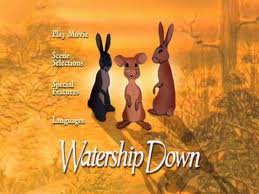
We gave this film a classification of PG because it promotes some violence and continues to do so towards the end of the film without sign of holding up, and it doesn't counter balance within the end of the sequence shown.
We later found that the film was A U classification, in some ways this was a shock to the group because there is a lot of violence permitted within part's of the film, and there were many distressing images.
We think that the classification, was not right because there was not enough violence shown within the film for it to be classified as a PG, and because the film was animated, so it did not have as a big effect as if the image was a real life filmed image.
However when we did some research, we found out that many adults who had seen this film also suggested that it should be classified as a PG of in some cases some even said as a 12.
Overall we came to the conclusion that people have different opinions that don't necessarily fit with the generalisations film classifications offer. This creates a very topical issue in our modern day media society.

We found such images like this in the clip which came across as rather disturbing.

We thought this because children don't see rabbits as being evil, as it's not the impression that such an audience would get, however the animation makes the film look less realistic, which reassures the children's audience
Information about the BBFC
The BBFC

The BBFC are a a British film classification company, it is non-governmental and it was set up in 1912.
The BBFC are designated for the responsibility, of classifying the films and DVD's. The BBFC, stands for- The British Board Of Film Classification.
The term classification stands for- classifying something into different categories, within the same meaning. Other words/ terms for classification are; categorising, sorting, grading, repressing and identifying.
The difference between a PG film and U classified film.

- A PG film stands for parental guidance, which means it is advise that a parent should be watching a film with a child under the age of 8 years old.
- No bad language is authorised or permitted.
- Must contain an anti-drug message if drug use was to be used.
- No frightening sequence's are aloud.
- No detailed prolonged behaviour is permitted.
- Mild bad language is aloud.
- Natural nudity with no sexual content
- Mild sex references
- Theme should be where more serious issues are featured.
- Moderate violence used.

U film is suitable for and audience of the age for or over.
- A U film should be positive and should counter balance violence.
- No drug references.
- No discriminative behaviour.
- Scary sequences should be very mild
- Infrequent use of mild bad language
- Occasional use of natural nudity
- Theme should be treated sensitively.
- Occasional mild violence only.
Adam Mulcahy's Chicken Run Research

Question answers based on the film:
1. Who do you think the different target audiences could be and why?
The target audience could be children because it is an animated film which revolves around unrealistic plot devices such as Chickens being able to talk. However, older adults could be the target audience as the plot revolves around the film 'The Great Escape' which only adults will have seen. The film also has many other references to other films but only minor.
2. Would you class this as a children's film and why?
- Yes because the rat characters tell many jokes which revolve around toilet humour.
- The colours are really defined and bright so they stand out to children.
- The obscure characteristics of the chickens would make children laugh.
Institutional Information
Directors: Peter Lord/Nick Park
Writers: Peter Lord/Nick Park
Stars: Mel Gibson/Julia Sawahla/ Phil Daniels
Release date: 30 June 2000
Genre: Family and Comedy
Budget: $42,000,000
Gross: $106,793,915
Production company: Dreamworks SKG
Run time: 84 minutes
References to:
The Wooden Horse (1950)
Ace in the Hole (1951)
A Town Like Alice (1956)
Separate Tables (1958)
The Great Escape (1963)
It's a Mad Mad Mad Mad World (1963)
Dr. Strangelove (1964)
"Star Trek" (1966)
The Italian Job (1969)
Escape of the Birdmen (1971)
Enter the Dragon (1973)
The Stepford Wives (1975)
Star Wars: A New Hope (1977)
Saturday Night Fever (1977)
Hooper (1978)
Alien (1979)
The Blues Brothers (1980)
Raiders of the Lost Ark (1981)
"Tenko" (1981)
Rocky III (1982)
Indiana Jones and the Temple of Doom (1984)
Back to the Future (1985)
Empire of the Sun (1987)
Back to the Future Part II (1989)
"The Simpsons" (1989)
Silent Cries (1993)
Wallace & Gromit in The Wrong Trousers (1993)
Braveheart (1995)
Rocky (1995)
Wallace and Gromit in A Close Shave (1995)
A Bug's Life (1998)
Gladiator (2000)
Wednesday, 24 November 2010
Monsters Inc.
Monsters Inc.

- Special effects used animation allows us to know that it is a children's film.
- Jumpy happy music
- Held hand camera movement allows the film to look for realistic for the children
- Mid close ups introduce the characters quicker.
- Panning over camera allows the children too see where the film is taking place
- opening credits allow the audience to no that it is a children's film because of the production company.
- Plot is shown early into clip making it simple for the children

- Plot is also outlined within the opening sequence; monsters coming in and out of doors.
- The characters are engaging- because they all look different
- Monsters are not always scary, come across to children as funny.
- Let's children face there fears in a safe environment without being scared
- Slow pace of editing allows the children to keep up with the film and whats going on in it.
- Dialogue is clearly structured and well spelt out.
- Genre is fantasy and adventure Hybrid genre
Favourite children's film
Finding Nemo


One of the opening scenes from Finding Nemo
- Finding Nemo was remembered so well for all of us because it was the first animated film about fish alone. Also because of the use of the bright colours used throughout, as well as the narrative. The plot gave us the reassurance that family are important to us and that we should never give up on them.
- This film appeals to children because it gives them a sense of imagination, and adventure. It also gives the children an idea of life underwater and being able to make-believe.

- The impact that this film had, was the significance, the loyalty of being a parent.
- It shows that children with disabilities, and people who come across to others as being different doesn't matter because, we are all the same and should be treated equally, for example Nemo in this film is a prime example of this.
- The moral of the story is to never give up no matter what's in your way.
One of the opening scenes from Finding Nemo
Monday, 22 November 2010
Childrens Film Characters
Children's Film Animated Character
Kevin the Bird

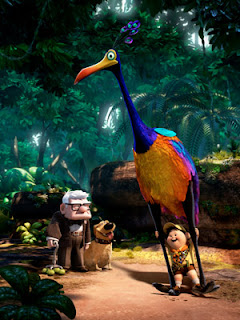
Kevin the Bird

- This character is represented as a comical addition to the film story line as well as playing a crucial part.
- The character is conveyed as an attractive, brightly colored bird, which instantly appeals to the young target audience.
- The animal's non-naturalistic attitude contributes to this dynamic image shown. Kevin performs a variety of obscure actions such as swallowing Carl Fredricksons walking stick, only to choke it up again.

The bottom Clip below is the first time the audience is introduced to Kevin the bird.
In this clip there is a range of uses of cinematography. There is a lot of Low angles in the clip which makes the the bird look more power full. However this contrast with the use of the mid shot used when Russell (the little boy) tells Carl ( the older man) that he found the snipe. Which makes the two look in more power.
In this clip there is a range of uses of cinematography. There is a lot of Low angles in the clip which makes the the bird look more power full. However this contrast with the use of the mid shot used when Russell (the little boy) tells Carl ( the older man) that he found the snipe. Which makes the two look in more power.
Preliminary Task
For our preliminary task we thought...
- We learnt that working as team for this task was highly important.
- It went really well because we all worked together, and came prepared and brought all the props we needed for the day, so that we could film.
- We were also able to use moving image with the teddies which made it look more realistic.
Monday, 15 November 2010
story board ideas
 |
|
 |
|
 |
|
 |
|
 |
|
 |
|
- We have decided to use teddies for this task because it will give us some practice for when it comes too filming our actual children's film.
- There is the main Teddie; monkey who is the hero, (Adam monkey), and he has to save the stranded teddy (mel-bear), because the evil voodoo doll (connor-B) , has locked her up somewhere and, she can't get out.
- We are going to be filming this in a class room due to the weather incase it rains.
Script:
Voodoo "mwhahahaha"
Mel -bear in shot 2 -"help! help!"
Adam monkey in shot 3- " I will save you"
Voodoo doll- "HUH?" - shot for
Mel-bear "YEY, it's Adam the monkey", Adam the monkey "Err- yes it is."
Voodoo doll " Bring it on then" shot 6Adam bear "I will"
what each of us are doing
Mel - blog updater and teddy positions
Connor- editing
Adam - camera work
Subscribe to:
Posts (Atom)